 Apartamentos OviedoApartamentos Oviedo
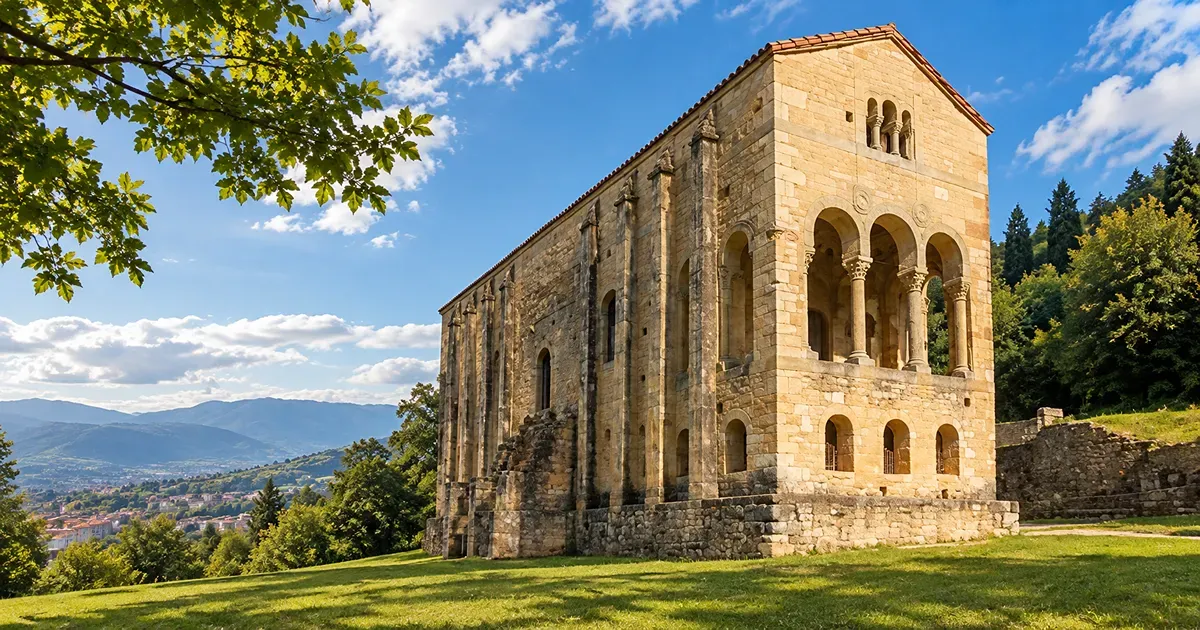
Oviedo isn’t just a comfortable city for a season-long stay — it’s also home to one of the most distinctive art collections in Europe. Here’s what to know before exploring it.
Asturian, or Pre-Romanesque, art is the architecture of the Asturian monarchy of the 9th and 10th centuries, considered one of the most complete surviving sets of early medieval architecture from Europe’s old Christian kingdoms. Unesco declared several of these monuments World Heritage Sites in 1985, and most of them are in Oviedo or a short walk from the city.
On the slopes of Mount Naranco, on the outskirts of Oviedo, stand two of the most important Pre-Romanesque buildings: Santa María del Naranco, built in the 9th century as part of a royal palace for King Ramiro I and later converted into a church, and San Miguel de Lillo, of which only part of the original structure survives today, though it still shows the reliefs that once decorated it.
You don’t need to leave the centre to continue the tour: the Cámara Santa of Oviedo Cathedral, the church of San Julián de los Prados (known as Santullano) and the Foncalada fountain are all part of the same World Heritage listing, and all sit within or close to the old town, a short distance from Jovellanos 14.
Outside the city, Santa Cristina de Lena is another of the Pre-Romanesque churches that complete this tour of 9th and 10th century Asturias, for anyone who wants to extend the visit beyond central Oviedo.
Tell us what you need and we'll get back to you directly.